

Pumps are essential equipment in many industries, from agriculture and construction to wastewater management and marine operations. Choosing the right pump can impact not only efficiency but also long-term operational costs and maintenance requirements. One of the most common comparisons is self-priming pump vs non self-priming pump — two widely used centrifugal pump types that differ significantly in operation and application.
In this article, SK Tech provides a comprehensive analysis: what each pump type is, how they work, their advantages and disadvantages, and which one is better suited for your system.
What is a Self-Priming Pump?
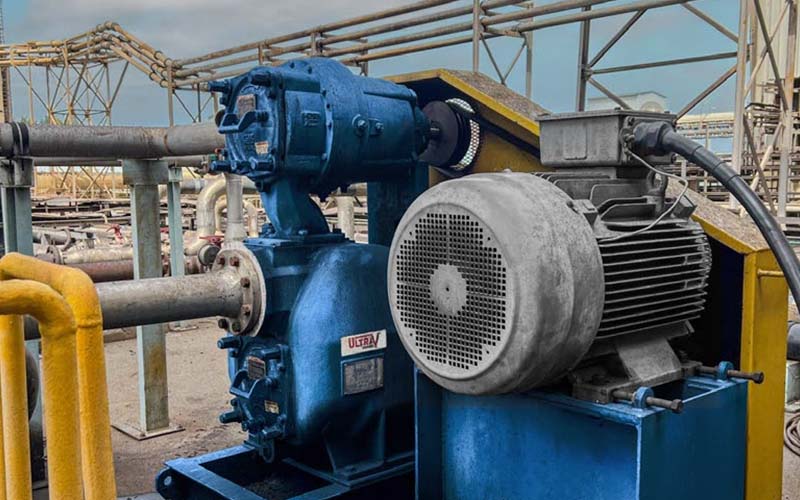
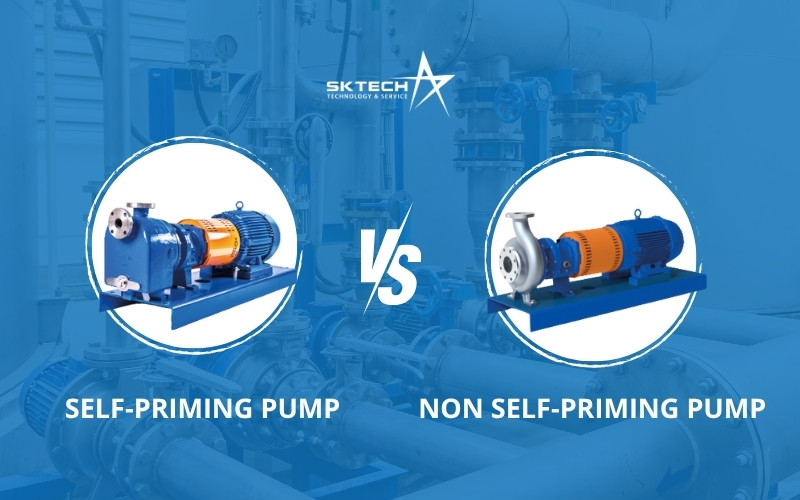
Before comparing, we need to understand each pump type. A self-priming pump is designed to automatically evacuate air from the suction line and re-prime itself after the first filling. This feature makes it highly convenient for systems that experience air ingress or intermittent operation.
Key Features:
- Requires initial priming only once; automatically re-primes later.
- Can handle air-liquid mixtures and light solids.
- Suitable for portable, temporary, or emergency pumping tasks.
- Frequently used in dewatering, construction sites, and agricultural irrigation.
What is a Non Self-Priming Pump?
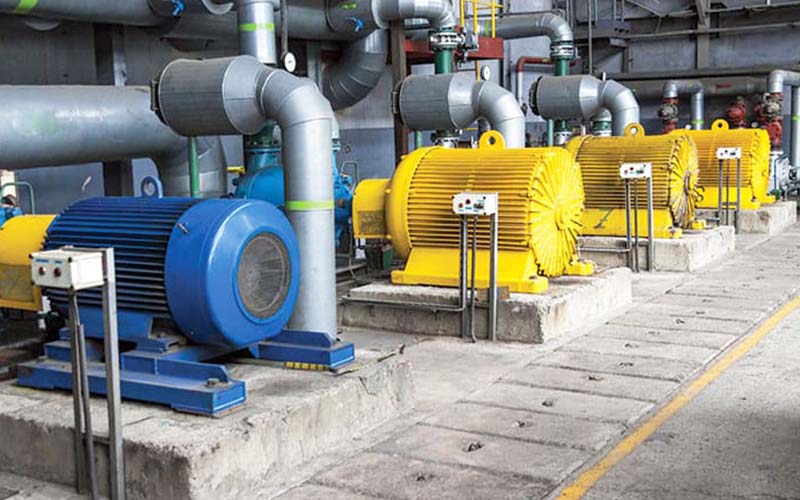
In contrast, a non self-priming pump lacks the ability to remove air on its own. It needs manual priming or a foot valve to keep the suction line filled with liquid. These pumps are ideal for systems where the suction line is always submerged, such as municipal water supply or sump applications.
Key Features:
- Must be primed manually or with foot valve support.
- Higher efficiency in continuous-duty operations.
- Lower initial cost compared to self-priming pumps.
- Commonly used in submerged or in-line systems.
Key Differences Between Self-Priming and Non Self-Priming Pumps
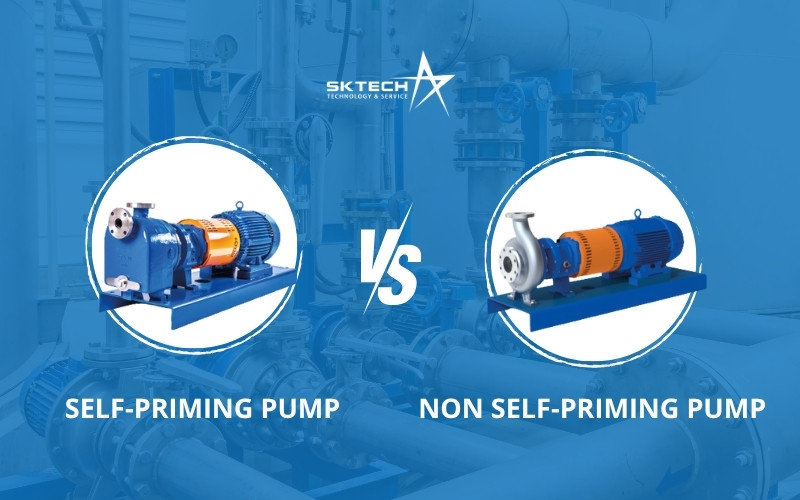
Before exploring pros and cons, it’s useful to highlight the core differences. Understanding these distinctions helps engineers and buyers decide which pump aligns with their operational needs.
| Criteria | Self-Priming Pump | Non Self-Priming Pump |
|---|---|---|
| Priming Method | Automatically re-primes after initial filling | Requires manual priming or foot valve |
| Installation | Simple above-ground installations | Best for submerged or flooded suction systems |
| Air Handling | Can handle air-liquid mixtures | Cannot handle air; must remain flooded |
| Cost | Higher purchase cost | Lower purchase cost |
| Efficiency | Slightly lower during priming process | Higher efficiency in continuous operations |
| Applications | Intermittent, portable, emergency pumping | Continuous supply systems, submerged operations |
Advantages and Disadvantages of Each Pump Type
Both self-priming pumps and non self-priming pumps offer unique strengths and limitations. By analyzing their pros and cons, you can select the right type for your specific requirements.
Self-Priming Pumps
Advantages of Self-Priming Pumps:
- No need for frequent manual priming, saving time and labor.
- Flexible for portable or temporary setups.
- Handles intermittent operation well (start-stop cycles).
- Reduces downtime in emergency dewatering or flood control tasks.
Disadvantages of Self-Priming Pumps:
- Higher initial cost compared to standard centrifugal pumps.
- Limited suction lift (generally up to 7–8 meters).
- Lower efficiency during priming stage.
- Requires initial filling with liquid at installation.
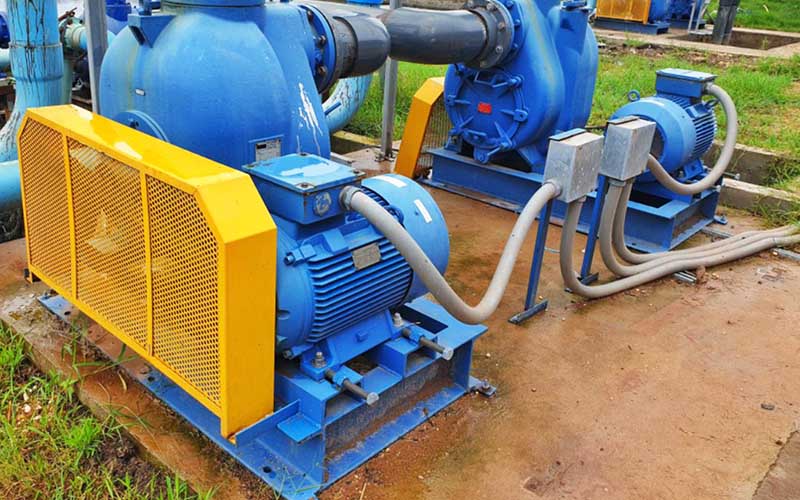
Non Self-Priming Pumps
Advantages of Non Self-Priming Pumps:
- Higher efficiency in continuous-duty cycles.
- More affordable and widely available.
- Reliable for submerged and permanent installations.
Disadvantages of Non Self-Priming Pumps:
- Cannot handle air in suction line — must always stay flooded.
- Requires manual priming or additional components like foot valves.
- Less suitable for mobile or emergency pumping tasks.
Which Pump Should You Choose?
After understanding the pros and cons, the next step is selecting the right pump for your application. Consider factors such as installation conditions, frequency of use, and fluid characteristics.
Choose self-priming pump if:
- Your system is above ground and experiences frequent restarts.
- You need portability or temporary installation flexibility.
- The pumped liquid may contain air or light solids.
Choose non self-priming pump if:
- Your suction line is permanently submerged.
- You prioritize efficiency and lower costs.
- Your system operates continuously, such as municipal water supply.
Applications of Self-Priming and Non Self-Priming Pumps
Both pumps are versatile but excel in different fields. Below are common industry applications:
- Agriculture: Irrigation, livestock water supply (self-priming preferred for mobile use).
- Construction: Dewatering flooded sites and trenches (self-priming).
- Wastewater Treatment: Sludge and wastewater transfer (both types depending on setup).
- Marine & Chemical: Cooling water, fuel transfer (non self-priming for submerged use).
Famous Brands and Where to Buy
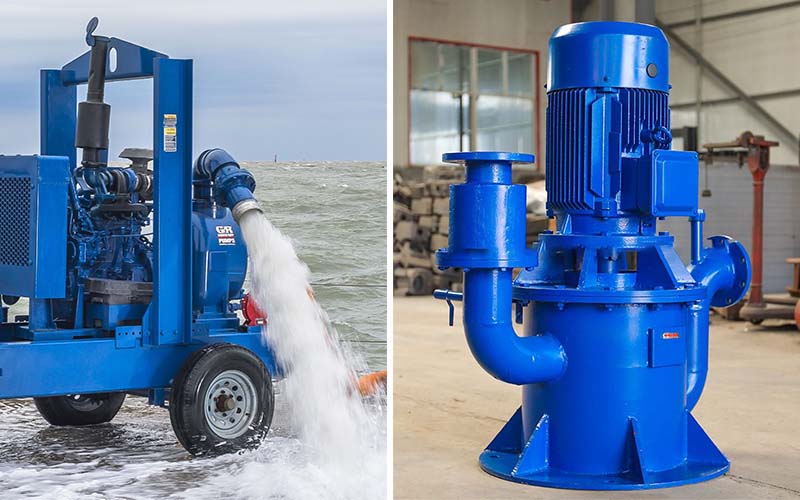
Selecting a trusted manufacturer ensures performance and durability. Global brands like Ebara, Tsurumi, and Gorman-Rupp produce both self-priming and non self-priming pumps for diverse industries.
SK Tech is the official distributor in Vietnam, offering genuine products, technical consultation, and after-sales support. Visit www.sktech.com.vn for detailed catalogs and quotations.
Conclusion
Both self-priming pumps and non self-priming pumps are vital in fluid handling systems, each excelling in specific scenarios. The ideal choice depends on your operational conditions, installation design, and cost considerations.
For expert guidance and high-quality pump solutions, contact SK Tech today for tailored recommendations.