

Choosing the right pump for industrial or residential use is critical to ensure efficiency, reliability, and cost-effectiveness. Among the most commonly used pump types are self-priming pumps and centrifugal pumps. Both belong to the centrifugal family but differ significantly in priming ability, installation requirements, and performance characteristics.
This guide by SK Tech provides a comprehensive comparison of Self-Priming Pumps vs Centrifugal Pumps, covering everything from definitions and working principles to pros, cons, applications, and selection tips — helping you make the right decision for your specific needs.
Overview of Self-Priming Pumps and Centrifugal Pumps
Before comparing these two pump types, let’s briefly define what each is and where they are commonly used.
What is a Self-Priming Pump?
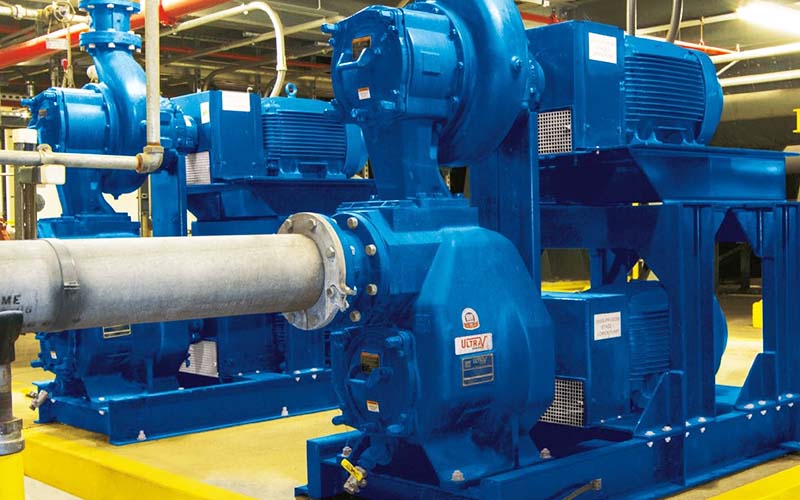
A self-priming pump is a centrifugal pump specially designed to evacuate air from the suction line and automatically prime itself after the first fill. It can operate even if the pump is installed above the liquid source, making it highly versatile.
Key features of self-priming pumps:
- Requires initial water filling only once.
- Can handle air-liquid mixtures and light solids.
- Excellent for systems where frequent starting/stopping occurs.
- Popular in dewatering, irrigation, and portable pump setups.
What is a Centrifugal Pump?
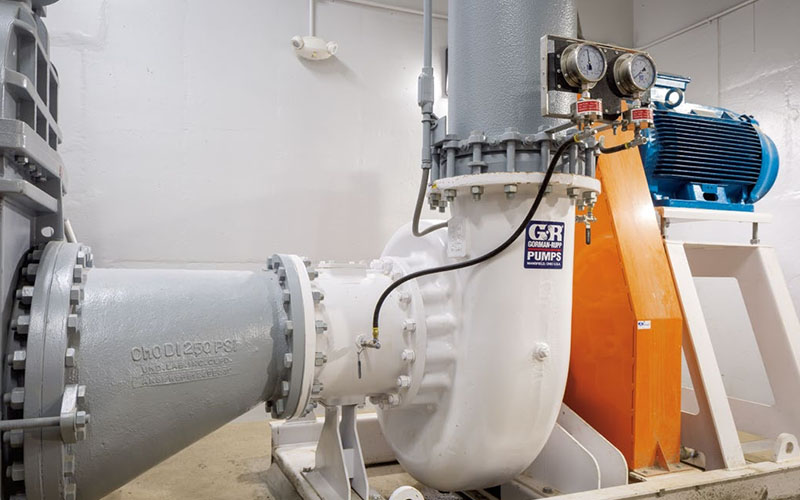
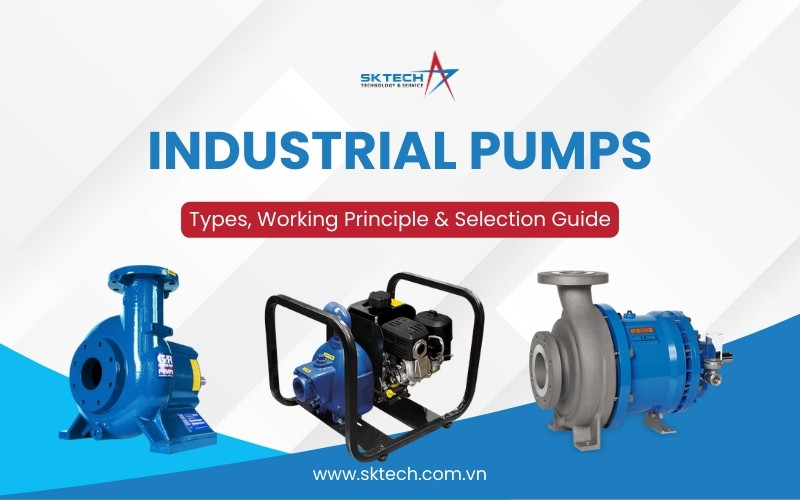
A centrifugal pump is one of the most widely used pumps worldwide, converting rotational energy into kinetic energy to move liquids. Standard centrifugal pumps are non-self-priming, meaning they must remain flooded or manually primed before use.
Key features of centrifugal pumps:
- High efficiency during continuous operations.
- Simple design and cost-effective.
- Commonly used in fixed installations like municipal water systems.
- Requires foot valves or external priming devices to operate.
How Do They Work? (Working Principles)
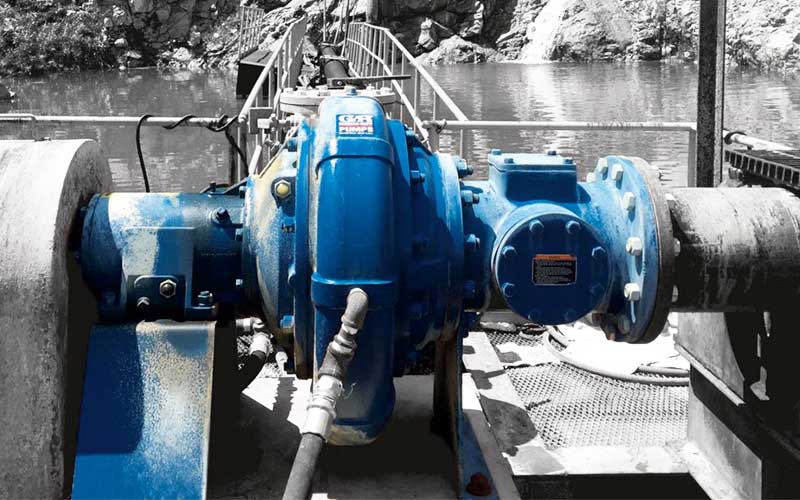
The operational principles of these two pumps highlight their key differences.
Self-Priming Pump:
- Uses a combination of air and water to create a vacuum.
- Expels air from the suction line and draws liquid into the pump casing.
- After initial priming, it automatically re-primes during subsequent uses.
Centrifugal Pump:
- Relies on a rotating impeller to impart energy to the liquid.
- Requires a flooded suction or external priming since air in the suction line prevents proper operation.
- Efficient for continuous-duty systems where suction remains submerged.
Key Differences Between Self-Priming and Centrifugal Pumps
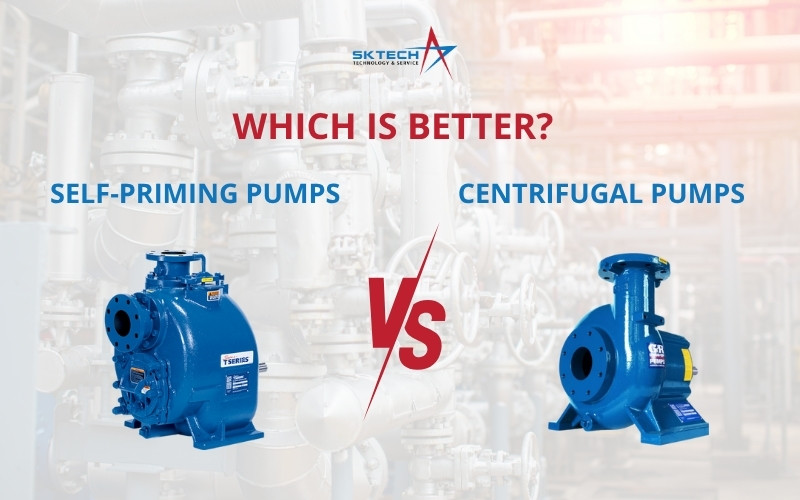
Understanding the distinctions is crucial to selecting the right pump. Below is a detailed comparison table:
| Criteria | Self-Priming Pump | Centrifugal Pump |
|---|---|---|
| Priming Capability | Automatically re-primes after initial filling | Requires manual priming or flooded suction |
| Air Handling | Can manage air-liquid mixtures and bubbles | Cannot handle air; air causes cavitation/failure |
| Installation Location | Can be installed above liquid level | Best for submerged or flooded suction systems |
| Operational Efficiency | Slightly lower during priming, stable afterward | High efficiency for continuous operations |
| Maintenance | Easier for portable systems, more parts to inspect | Simple design, easy to maintain in fixed setups |
| Cost | Higher upfront investment | Lower initial cost and widely available |
| Applications | Portable, intermittent, emergency pumping | Continuous water supply, industrial processing |
See more: Comparison of self-priming and non-self-priming pumps
Advantages and Disadvantages of Each Pump Type
Both self-priming pumps and centrifugal pumps come with unique benefits and limitations. Let’s explore them to determine which suits your operation.
Advantages of Self-Priming Pumps
- Automatic re-priming saves time and reduces labor costs.
- Ideal for systems with frequent air ingress or intermittent operations.
- Highly versatile for portable or emergency applications.
- Can handle light solids and bubbles in the fluid stream.
Disadvantages of Self-Priming Pumps
- Higher purchase cost compared to standard centrifugal pumps.
- Limited suction lift (typically up to 7–8 meters).
- Lower efficiency during the priming stage.
- Requires initial water fill at installation.
Advantages of Centrifugal Pumps
- High efficiency for continuous-duty pumping.
- Lower cost and widely available in various designs and capacities.
- Simple construction leads to easy maintenance and long service life.
- Reliable for submerged and fixed installations.
Disadvantages of Centrifugal Pumps
- Cannot handle air; requires foot valve or external priming.
- Loses prime if air enters the suction line.
- Less suitable for mobile or intermittent pumping tasks.
Applications of Each Pump Type
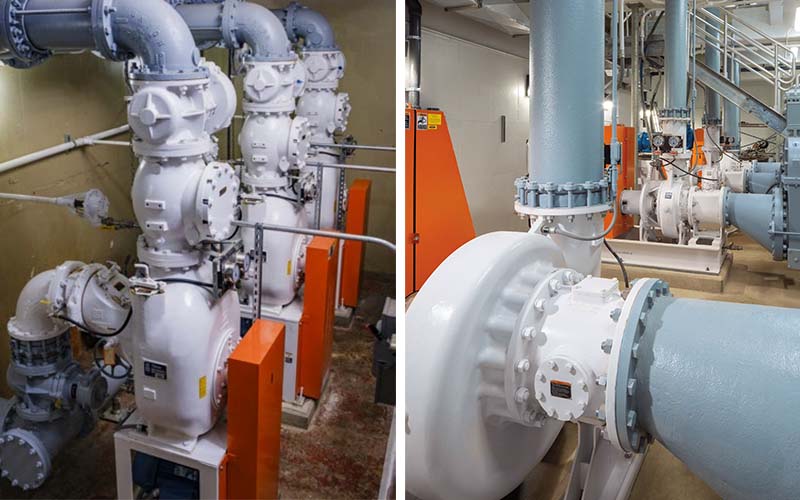
The choice between self-priming pumps vs centrifugal pumps often depends on application needs. Here are common uses for each:
Self-Priming Pumps:
- Construction site dewatering and flood control.
- Portable water transfer and agricultural irrigation.
- Emergency pumping and firefighting systems.
- Industrial wastewater handling with air-liquid mixtures.
Centrifugal Pumps:
- Municipal water supply and distribution systems.
- Industrial process pumping in chemical and manufacturing plants.
- Cooling water and boiler feed applications.
- Continuous-duty operations where suction is always submerged.
Which Pump Should You Choose? (Selection Guide)
Selecting the right pump requires assessing system design, installation location, operating frequency, and budget. Here’s a quick guide:
Choose a Self-Priming Pump if:
- The pump is positioned above the water source.
- The system frequently starts and stops or experiences air ingress.
- Portability and quick setup are priorities.
Choose a Centrifugal Pump if:
- Suction is always flooded or submerged.
- Continuous-duty operation is required for cost efficiency.
- Budget constraints favor simpler pump designs.
Famous Brands and Where to Buy in Vietnam
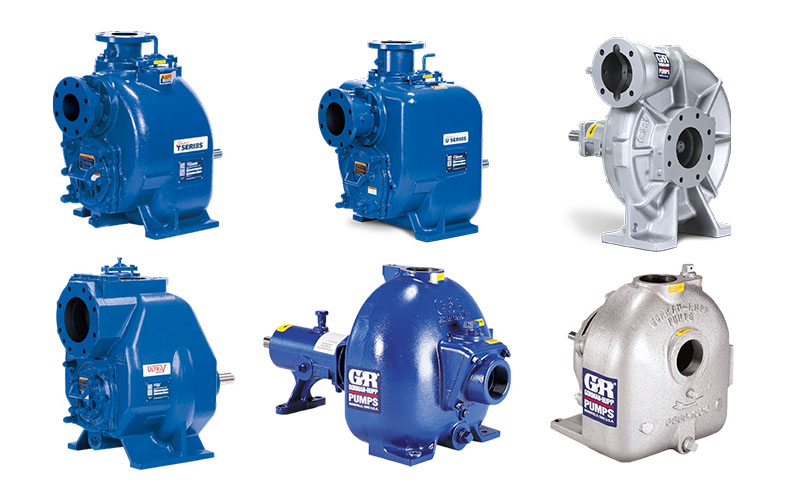
Reliable pump brands ensure durability and consistent performance. Leading names include Ebara, Tsurumi, and Gorman-Rupp, offering both self-priming and centrifugal models.
SK Tech is an official distributor in Vietnam, providing genuine pumps, technical consultation, and after-sales service. Visit www.sktech.com.vn for catalogs, specifications, and quotations.
Conclusion
Both self-priming pumps and centrifugal pumps are vital in fluid transfer systems, yet each serves different needs. Self-priming pumps excel in portability and air-handling, while centrifugal pumps dominate continuous, submerged installations.
For expert advice and high-quality pumps tailored to your project, contact SK Tech today to explore the best solutions for your application.
FAQ – Frequently Asked Questions
Can a centrifugal pump be converted into a self-priming pump?
No, standard centrifugal pumps cannot self-prime. However, adding priming devices like foot valves or installing priming tanks can help maintain suction.
Do self-priming pumps require initial water filling?
Yes, they must be filled with liquid during the first installation to function properly. After that, they can automatically re-prime.
Which pump is more energy-efficient: self-priming or centrifugal?
Centrifugal pumps are typically more energy-efficient during continuous operations, while self-priming pumps may consume slightly more energy during priming cycles.
Can self-priming pumps handle solids or slurry?
Some self-priming pumps can handle light solids, but for heavy slurry, specialized slurry pumps are recommended.
How do I choose between self-priming and centrifugal pumps?
Consider installation height, frequency of operation, air-handling requirements, and budget. Consult with suppliers like SK Tech for tailored recommendations.